




Serious vulnerabilities fixed in Omron CX-Supervisor

The vulnerabilities allow for denial of service and code execution with application privileges.
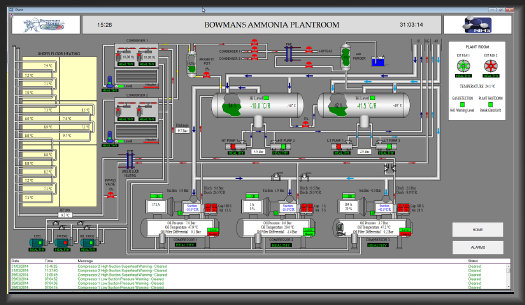
Japanese electronics manufacturer Omron has released an update for its CX-Supervisor software. The update fixes several vulnerabilities that could allow denial of service and code execution with application privileges. CX-Supervisor is software for creating human-machine interfaces for SCADA systems. The tool is used at enterprises worldwide, primarily in the energy sector.
Vulnerabilities in CX-Supervisor were discovered by security researcher Esteban Ruiz of Source Incite. The issues affect CX-Supervisor versions 3.42 and earlier, so users are strongly advised to update to the latest version 3.5.0.11.
CVE-2018-19011: An application can execute code embedded in a project file, allowing an attacker to execute malicious code within the context of the application. This vulnerability has a CVSS v3 score of 7.3 out of a maximum of 10.
CVE-2018-19013: An attacker can inject file deletion commands and/or delete the contents of files on a device by sending a specially crafted project file. This vulnerability has a CVSS v3 score of 5.0 out of a maximum of 10.
CVE-2018-19015: An attacker can inject commands to launch programs, as well as create, write, and read files on the device by sending a specially crafted project file. This vulnerability allows for code execution with application privileges. According to the CVSS v3 scoring system, this vulnerability has a score of 7.3 out of a maximum of 10.
CVE-2018-19017: Use-after-free vulnerability. When processing project files, the application fails to check whether they reference freed memory. Using a specially configured project file, an attacker can execute code with the application’s privileges. This vulnerability has a CVSS v3 score of 7.3 out of a maximum of 10.
CVE-2018-19019: A type confusion error occurs when the application processes project files. Using a specially crafted project file, an attacker can execute code with the application’s privileges. This vulnerability has a CVSS v3 score of 7.3 out of a maximum of 10.
O‘xshash maqolalar
Киберугрозы 2026: как ESET защищает дом и бизнес
Аналитика и тренды Киберугрозы 2026 Как ESET защищает дом и бизнес Искусственный интеллект, автоматизация атак и социаль…
O‘qish
Windows yoki Office kaliti rasmiy ekanligini qanday tekshirish mumkin?
Uzsoft.uz’ning Microsoft litsenziyalari bo‘yicha qo‘llanmasi Windows yoki Office kaliti rasmiy ekanligini qanday tekshir…
O‘qish
Dasturiy ta’minotni xarid qilishda EHF va shartnomani qanday olish mumkin?
Yuridik shaxslar va buxgalteriya uchun qo‘llanma Dasturiy ta’minotni xarid qilishda EHF va shartnomani qanday olish mumk…
O‘qish